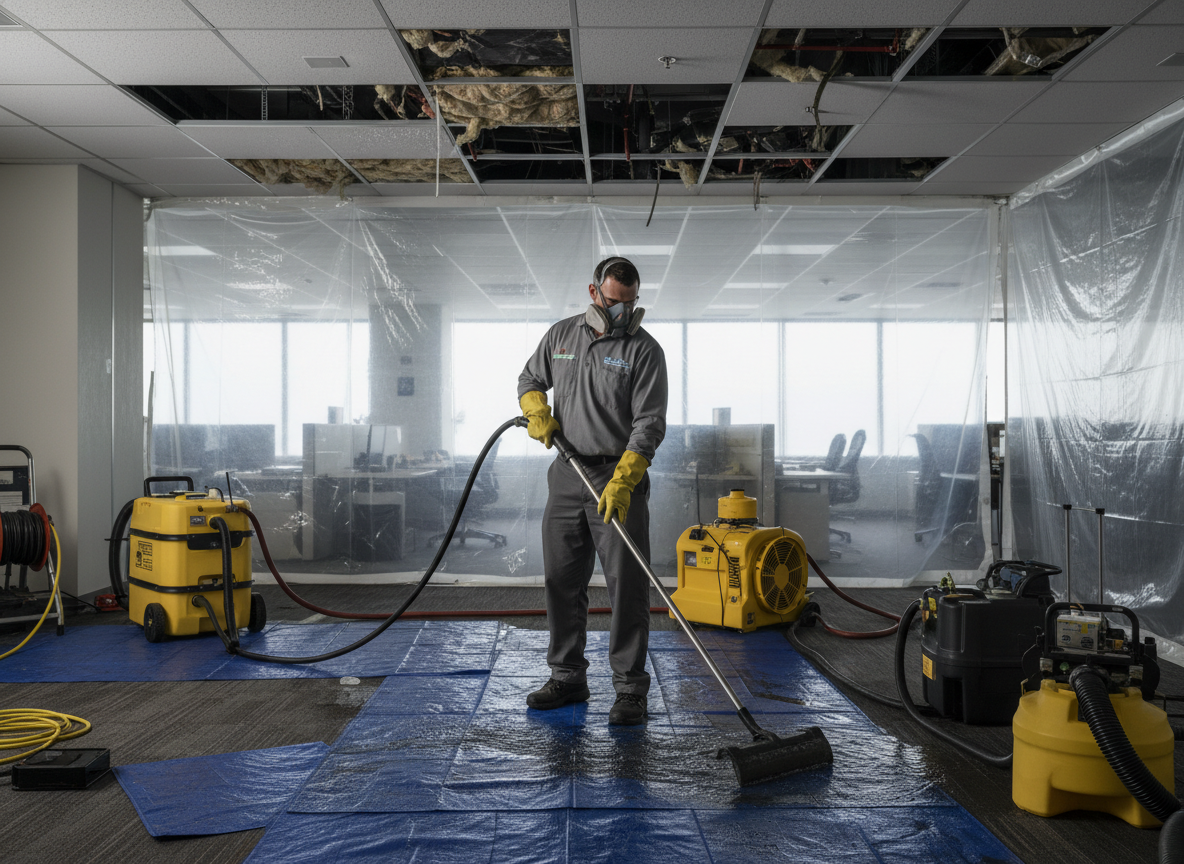
Waterloo commercial buildings along the Cedar River corridor and in older Downtown blocks often have flat roofs and aging cast-iron drains that fail during heavy spring rains. Once water enters, it travels under VCT tile or through suspended ceilings into wall cavities shared with neighboring tenants, requiring extraction before humidity from the continental climate drives mold growth within forty-eight hours. Technicians map moisture with meters rather than guessing, because brick and limestone facades in the Grout Museum District retain water differently than the wood-frame retail spaces on the West Side.
Flood events tied to rapid snowmelt or Cedar Rapids-area overflow affect low-lying East Side warehouses first. In these cases, removal of contaminated carpet pad and baseboard must happen the same day to keep bacterial counts down; otherwise, Black Hawk County health requirements can force extended closure. Drying plans account for the fact that summer heat pushes indoor humidity above seventy percent, so high-velocity air movers and dehumidifiers run continuously while crews monitor daily moisture logs to prevent secondary damage to electrical panels and HVAC returns.
Edge cases appear in multi-story buildings near the Sullivan Brothers Veterans Museum where water migrates downward through elevator shafts. Sealing penetrations and isolating zones prevents spread to occupied floors above. Crews also check for hidden saturation in concrete slab joints common to 1960s-era commercial stock, because trapped moisture here leads to recurring musty odors long after visible water is gone.
Technician insight
In Waterloo the thing that catches most people out with Commercial Water Damage Restoration is how quickly humidity from our hot summers drives mold behind the plaster in 1920s Downtown storefronts; once it reaches the shared party walls you end up drying two businesses instead of one.
West Side Retail Flood
A pipe burst above a clothing store near the West Side sent water under display cases and into the neighboring unit. Meters showed saturation in the slab joint and base of the dividing wall. Crews extracted water the same afternoon, opened the cavities, and ran drying equipment for four days until readings stabilized, allowing both businesses to reopen without mold issues.
Commercial Water Damage Restoration Services We Offer
✓Office Building Flood Cleanup
Rapid water removal and drying for multi-tenant offices in Downtown Waterloo to limit business interruption and protect shared electrical and data infrastructure.
✓Retail Space Water Extraction
Targeted extraction and moisture mapping for stores on the West Side and East Side where display fixtures and inventory sit directly on slab floors prone to wicking.
✓Warehouse Moisture Remediation
Large-scale drying and contaminant removal for industrial buildings near the Cedar Falls border where high ceilings and open floor plans change airflow patterns.
✓Restaurant Kitchen Water Damage Repair
Cleanup of grease-laden water in food-service spaces that requires separation of waste streams to meet local health department expectations.
✓Commercial Ceiling and Wall Cavity Drying
Access and drying of hidden voids above suspended ceilings and behind plaster walls typical in older Black Hawk County commercial stock.
Commercial Water Damage Restoration Cost in Waterloo, IA
| Service | Typical Range | What Affects It |
|---|---|---|
| Initial commercial extraction visit | $600–$1,400 | Size of affected area and water depth move the price |
| Daily drying equipment package | $250–$550 | Number of air movers and dehumidifiers required |
| Wall and ceiling cavity drying | $400–$900 | Access difficulty in older Downtown buildings |
| Contaminated water handling | $300–$700 | Category 3 water from river or sewer sources |
Ranges are typical for Waterloo, IA and confirmed with an exact written quote before any work starts.
How it works
- 1
Site Assessment
Technician inspects all affected commercial spaces, documents moisture levels, and identifies migration paths through shared walls or shafts.
- 2
Water Removal
Extraction equipment removes standing water from floors and voids while containing any contaminated runoff from Cedar River flooding.
- 3
Drying And Monitoring
Air movers and dehumidifiers operate with daily meter checks until readings return to normal for the building materials present.
- 4
Final Clearance
Visual inspection and moisture verification confirm the space meets drying standards before tenants return.
Pricing
Upfront quotes after on-site inspection; final cost depends on square footage, water category, and drying duration.